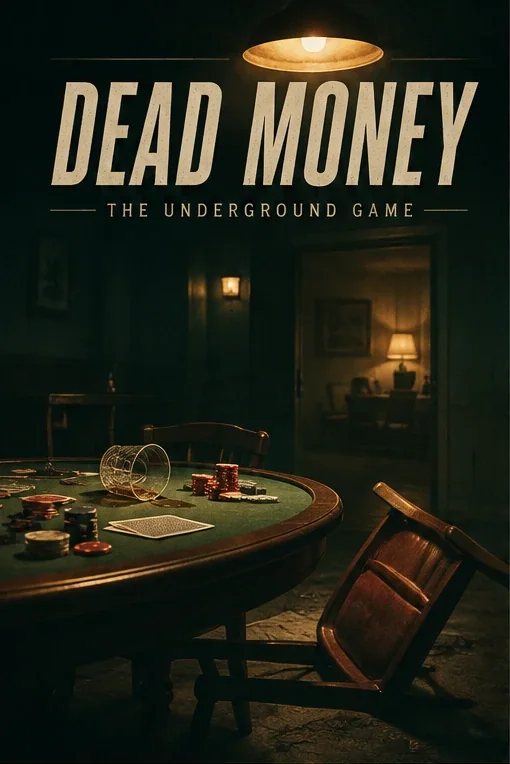
Luc Walpoth's Dead Money (2024) places a familiar poker-movie premise inside a compressed crime thriller. Professional player Andy, portrayed by Emile Hirsch, and his girlfriend Chloe, played by India Eisley, encounter a dangerous situation after a private poker game is robbed. Their subsequent ordeal unfolds over roughly twenty-four hours, during which financial obligations and personal safety become inseparable.
The title refers to money already committed to a pot that may no longer belong to a player who can win it. Within the story it acquires a more ominous meaning: the pursuit of money exposes the characters to risks that cannot be measured by the result of a hand. The film uses poker to create dramatic pressure rather than to provide instruction for competitive gambling. This guide contains plot discussion.
The Underground Game
Why the home poker game matters
The central robbery disrupts a setting that initially appears to operate according to recognizable rules. Players know what the cards mean and expect the participants to follow established conventions. The arrival of criminal danger breaks that assumption, exposing the difference between understanding a game and understanding the environment in which it takes place.
Private games can exist in many different contexts. The film focuses on an extreme criminal situation, not on a representative account of ordinary poker. Its suspense comes from the absence of safeguards and the uncertainty surrounding the characters' relationships. The money on the table becomes a source of danger beyond the cards themselves.
Andy believes that his expertise may help him address the crisis. Yet his knowledge cannot control the intentions of other people, guarantee Chloe's safety or eliminate the possibility of further consequences. This distinction becomes central to the film's psychological conflict.
Andy and Chloe: two different stakes
For Andy, poker is part of his professional identity. Chloe's presence gives the story a separate emotional objective. The financial crisis is not simply a challenge to Andy's reputation as a player; it threatens someone close to him. His desire to resolve the situation therefore combines ambition, fear and responsibility.
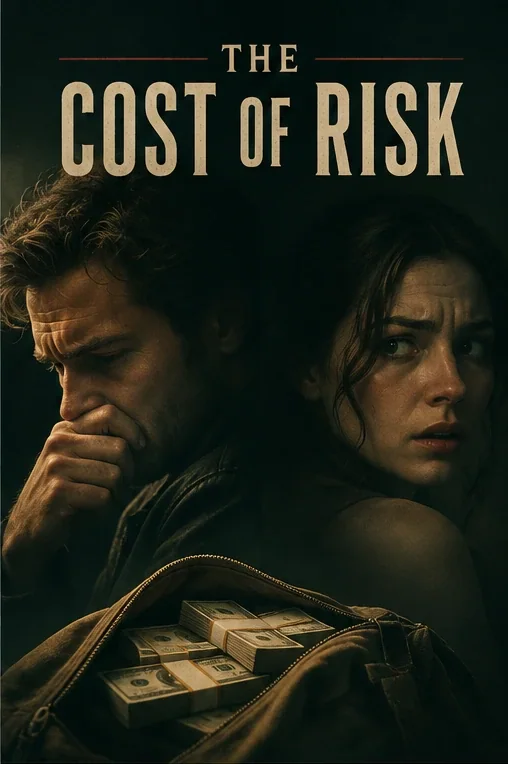
AI-generated editorial illustration; not an official film still.
This combination makes his decisions increasingly difficult to evaluate. A character who believes a game is the only available solution may pay less attention to alternatives. Financial pressure can narrow attention, and the perceived urgency of a crisis can make an additional gamble appear more reasonable than it would under ordinary circumstances.
The movie belongs to a tradition of gambling thrillers in which a final competition appears to offer a way out. Its compressed timeline reinforces the feeling that the protagonist has no opportunity to reflect. The audience is encouraged to experience urgency rather than to assess the circumstances from a detached perspective.
Crime and Consequences
Why the robbery changes the nature of risk
The risk associated with a legitimate card game concerns uncertain outcomes within an agreed system. Criminal activity introduces a fundamentally different category of uncertainty. In Dead Money, Andy must deal with people who are not bound by the expectations of fair competition.
Financial expertise is of limited value when the underlying situation involves coercion, deception and unstable loyalties. The film dramatizes this limitation through the widening consequences of the original robbery. A wager no longer concerns money alone; it becomes connected to obligations and relationships outside the room.
Other poker thrillers explore similar contrasts. Shade treats deception as the foundation of its narrative. Killing Them Softly examines how a robbery damages the confidence of an entire criminal economy. Dead Money instead concentrates on the immediate personal consequences for its central couple.
Criminal pressure and the illusion of control
The illusion of control is the tendency to overestimate one's influence over uncertain circumstances. Andy's professional experience makes his apparent confidence understandable, but his surroundings contain risks that cannot be evaluated through poker expertise alone.
The movie also illustrates escalation of commitment: the more someone has already invested in an objective, the harder it may become to abandon it. Previous losses, financial obligations and the desire to protect another person can combine to create a powerful motivation for further risk.
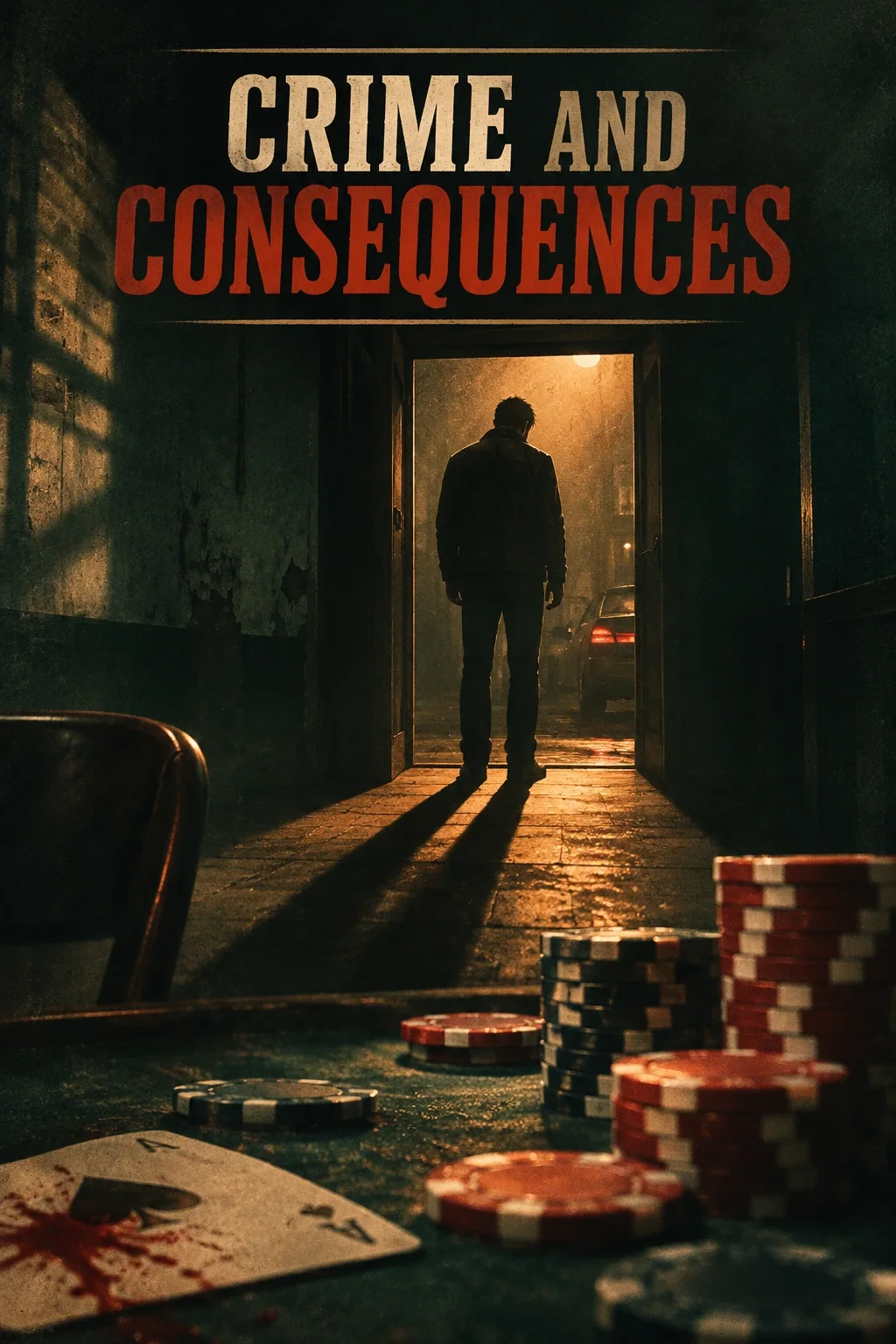
AI-generated editorial illustration; not an official film still.
These concepts help explain the story without requiring the audience to conclude that Andy has a particular clinical diagnosis. Fictional characters may demonstrate recognizable behavioral patterns even when their circumstances are intentionally heightened for entertainment.
The final game and its narrative function
The film's climax centers on a consequential game in which Andy's financial situation and Chloe's safety are tied to the result. The distribution synopsis emphasizes that he must confront the most important game of his life. Its narrative function is to bring the earlier financial and interpersonal conflicts into one concentrated setting.
The pressure creates a familiar cinematic structure: a protagonist is forced to demonstrate the ability that originally contributed to the crisis. This can be an effective thriller device, but it has a limitation when interpreted as a depiction of gambling-related harm. A screenplay can arrange for an extraordinary result at exactly the moment it is needed; ordinary financial uncertainty offers no comparable guarantee.
The strongest reading of the film therefore concerns the costs of becoming dependent on an uncertain outcome. The important issue is not whether one particular hand is played well. It is why Andy's options have become so limited that another game appears necessary.
How realistic is Dead Money?
The movie incorporates the recognizable atmosphere of private poker, financial stress and interpersonal suspicion. Its criminal conflicts and compressed resolution belong to thriller conventions. The distinction matters because private games, casino tournaments and regulated online platforms differ substantially in their safeguards and legal status.
A fair game still involves financial risk; an unsafe or fraudulent environment adds further uncertainty. If gambling-related debt or threats are affecting a person's safety, additional gambling is not a reliable solution. Appropriate financial, legal and personal support can be more important than game knowledge.
Frequently asked questions
Who stars in Dead Money? Emile Hirsch plays Andy and India Eisley plays Chloe.
Is Dead Money a true story? The film is presented as a fictional crime thriller.
What is the main setting? A robbery at a private poker game establishes the central crisis.
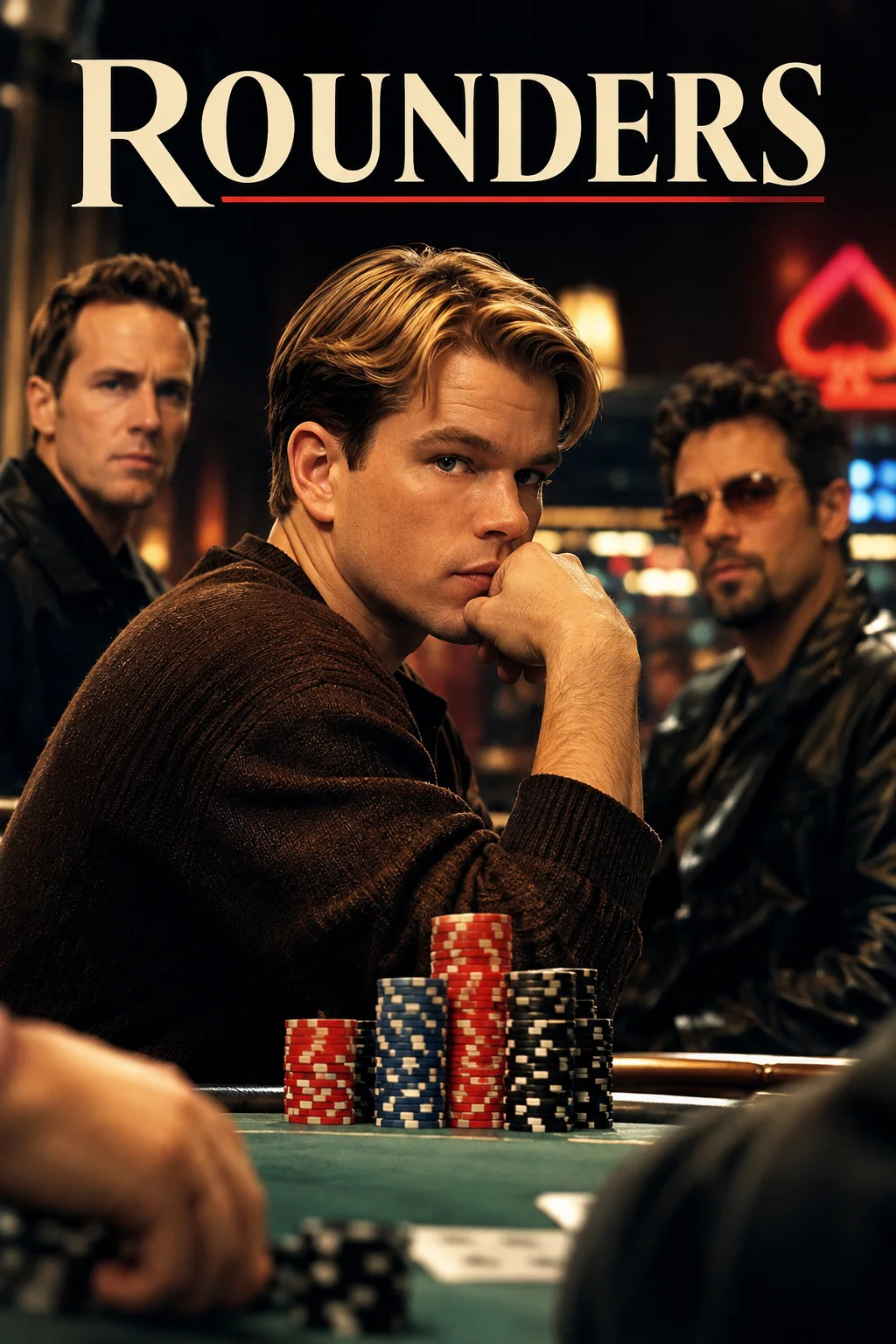
What makes the film different from Rounders? Rounders emphasizes poker ambition and identity; Dead Money gives greater weight to immediate criminal danger.
Final thoughts
Dead Money uses the uncertainty of poker to explore a much broader problem: the consequences of allowing financial risk to become inseparable from personal safety. Its most compelling tension is the gap between Andy's confidence in a specialized ability and his limited control over the situation surrounding him.