Not every gambling movie is built around a championship, a criminal conspiracy, or a desperate attempt to recover lost money. Lay the Favorite (2012) approaches sports betting through an unconventional coming-of-age story about a young woman discovering an unfamiliar industry and its eccentric personalities.
Directed by Stephen Frears and written by D. V. DeVincentis, the film stars Rebecca Hall as Beth Raymer, Bruce Willis as professional sports gambler Dink Heimowitz, and Catherine Zeta-Jones as his wife, Tulip. The screenplay adapts Raymer's 2010 memoir, which describes her experiences working in the sports gambling industry during a period of technological and commercial transformation. Rather than presenting gambling exclusively through the perspective of customers, the film introduces the people responsible for its everyday operations.
The Betting Operation
Beth Raymer's arrival in Las Vegas
Beth begins the movie searching for a different life. Her relocation to Las Vegas represents an opportunity to escape her previous circumstances and establish greater personal independence. She initially hopes to become a cocktail waitress, but an unexpected encounter introduces her to Dink Heimowitz and the world of professional sports gambling.
Dink recognizes her aptitude for numbers and offers her employment. The situation creates the movie's central contrast: Beth's unconventional appearance and enthusiastic personality conceal abilities that other people initially underestimate. Her development challenges the assumption that professional competence must conform to conventional expectations.
Inside Dink's sports gambling business
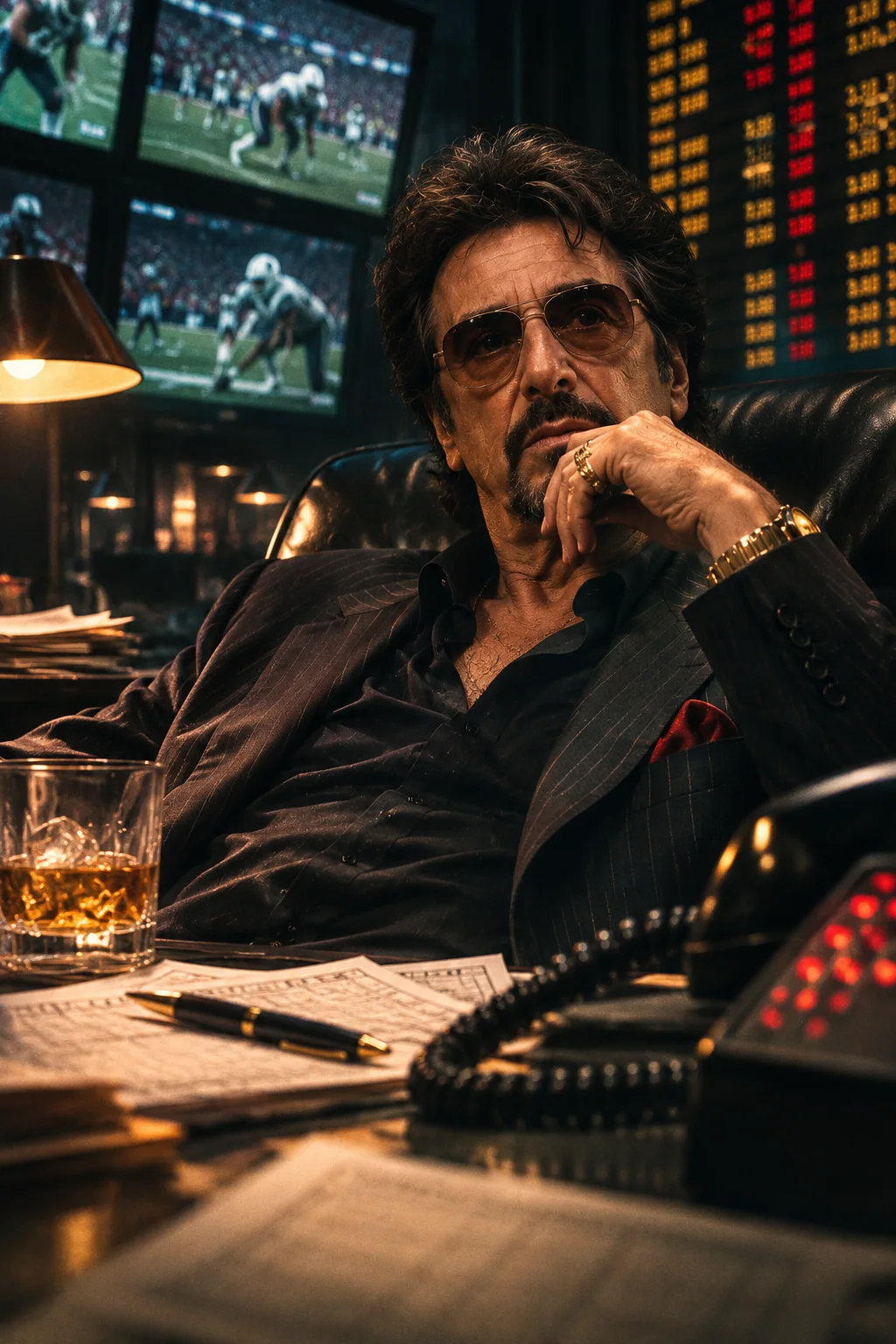
Dink operates within a professional gambling environment where information, communication, and financial records are central to everyday activities. The office is noticeably different from the glamorous casinos frequently associated with Las Vegas cinema. Telephones, computers, changing numbers, and conversations dominate the working environment.
Beth's responsibilities introduce her to the organizational side of sports betting. Through her experiences, the audience discovers a commercial subculture populated by individuals whose lives revolve around sporting events and uncertain financial outcomes. The film is less concerned with explaining specific wagering strategies than with examining the personalities and relationships behind the business.

AI-generated editorial illustration; not an official film still.
| Participant | Role |
|---|---|
| Professional sports gambler | Risks funds on sporting outcomes |
| Bookmaker | Accepts and settles wagers |
| Sports handicapper | Produces predictions about sporting events |
| Betting assistant | Supports administrative and communication activities |
| Customer | Assumes financial risk through gambling |
Dink is principally portrayed as a professional sports gambler, whereas Rosie is more closely associated with bookmaking. Their different approaches create an important contrast within Beth's professional journey. For a business selling predictions, read Two for the Money.
The transition to offshore gambling
The movie also follows Beth beyond Las Vegas. Her experiences eventually connect her with Rosie's activities in New York and Curaçao, introducing a wider geographical and commercial dimension. This reflects a significant historical development described in Raymer's memoir: the emergence of offshore online sportsbooks and the changing position of traditional bookmakers.
However, offshore operations should not automatically be considered lawful or adequately regulated simply because they operate from another jurisdiction. The movie uses this changing environment to expose Beth to increasingly complicated professional relationships and financial responsibilities.
Trust and Ambition
Beth Raymer: more than an unconventional newcomer
Rebecca Hall's performance emphasizes Beth's enthusiasm, emotional openness, and apparent naivety. These characteristics frequently lead other people to underestimate her intelligence. As she becomes more familiar with the gambling environment, Beth demonstrates that her abilities extend beyond the limited opportunities previously available to her.
Her professional development provides the movie with its coming-of-age structure. However, discovering an aptitude for a particular activity does not necessarily mean that the surrounding industry provides a sustainable future. Beth must eventually evaluate the people she trusts as carefully as she evaluates her professional opportunities.
Dink Heimowitz and Tulip
Bruce Willis portrays Dink as an experienced but eccentric professional gambler whose behavior challenges conventional expectations of a successful businessman. His relationship with Beth introduces an element of mentorship, although their growing emotional connection also creates complications. Dink recognizes abilities that other people have overlooked. Nevertheless, their professional relationship becomes increasingly difficult to separate from personal feelings.

AI-generated editorial illustration; not an official film still.
Catherine Zeta-Jones's Tulip introduces another perspective. Her suspicions and concerns expose tensions that cannot be resolved through professional success alone. The contrast between Tulip's carefully constructed appearance and Beth's spontaneous personality provides several comedic moments. Their conflict raises questions about trust, emotional boundaries, and the consequences of mixing professional and personal relationships.
Rosie and Jeremy
Vince Vaughn portrays Rosie, whose energetic personality contrasts with Dink's more established approach. Beth's decision to work with Rosie introduces her to a less predictable commercial environment. His operation exposes her to increasingly serious financial and legal complications.
Joshua Jackson's Jeremy provides Beth with a relationship outside her professional connection to Dink. Through Jeremy, the film explores whether Beth can establish a more stable identity without remaining dependent on the approval of experienced gamblers.
Why Lay the Favorite is a gambling comedy
Stephen Frears approaches the gambling environment through exaggerated personalities, rapid conversations, misunderstandings, and interpersonal conflict. The humor frequently emerges from the difference between how seriously the characters take their work and how unusual their behavior appears to outsiders.
Dink's superstitions, Tulip's dramatic reactions, and Rosie's relentless enthusiasm establish the distinctive comedic atmosphere. Unlike Uncut Gems, which communicates gambling-related anxiety through claustrophobic suspense, Lay the Favorite uses humor to make its characters' obsessions accessible. Comedy does not remove the financial and personal risks underlying their behavior.
Gambling psychology in Lay the Favorite
Dink initially believes Beth's presence contributes to favorable gambling outcomes. This association illustrates how superstitious beliefs can develop when people connect unrelated events with positive or negative results. A memorable winning sequence may reinforce the belief that a particular person, object, or ritual influences future outcomes. However, such associations do not establish a reliable causal relationship.
Beth's relationships with experienced professionals demonstrate how perceived authority can influence personal judgment. Individuals may place considerable trust in someone because of their reputation, experience, confidence, or apparent success. Professional knowledge does not guarantee ethical conduct or financial reliability.
Beth's original motivation is not necessarily the excitement of gambling itself. Her ambitions involve financial independence, professional recognition, and the opportunity to establish a different life. Nevertheless, employment within a gambling business exposes her to an environment where personal ambitions and financial uncertainty frequently overlap.

AI-generated editorial illustration; not an official film still.
Lay the Favorite ending explained
The final stages bring Beth's professional and personal conflicts together. Her involvement with Rosie's operation creates financial difficulties that threaten both her own circumstances and those of Jeremy. Dink and the people surrounding Beth become important sources of assistance as she attempts to resolve the crisis.
The ending emphasizes personal relationships, responsibility, and the possibility of establishing a more independent future. Rather than presenting professional gambling as Beth's ultimate destination, the narrative treats her experiences as part of a broader process of personal development.
Is Lay the Favorite based on a true story?
Yes. The film adapts Beth Raymer's autobiography, Lay the Favorite: A Memoir of Gambling, published in 2010. The book describes her experiences working with professional gamblers and bookmakers during the expansion of offshore sports betting. The main personalities have real-world foundations, although the screenplay condenses events and dramatizes relationships for cinematic purposes. This distinction makes the movie a companion to Molly's Game.
Frequently asked questions
Who plays Dink? Bruce Willis portrays Dink Heimowitz.
Is the movie about poker? No. It primarily concerns sports gambling, professional bettors, bookmakers, and their relationships.
Is it an accurate guide to betting? It reflects aspects of gambling culture but simplifies commercial activities for entertainment.
Final thoughts
Lay the Favorite provides an unconventional perspective on gambling cinema through comedy, eccentric characters, and a memoir-based coming-of-age story. Beth Raymer's journey is less about gambling success than about discovering her abilities and establishing an independent identity beyond the expectations of others.