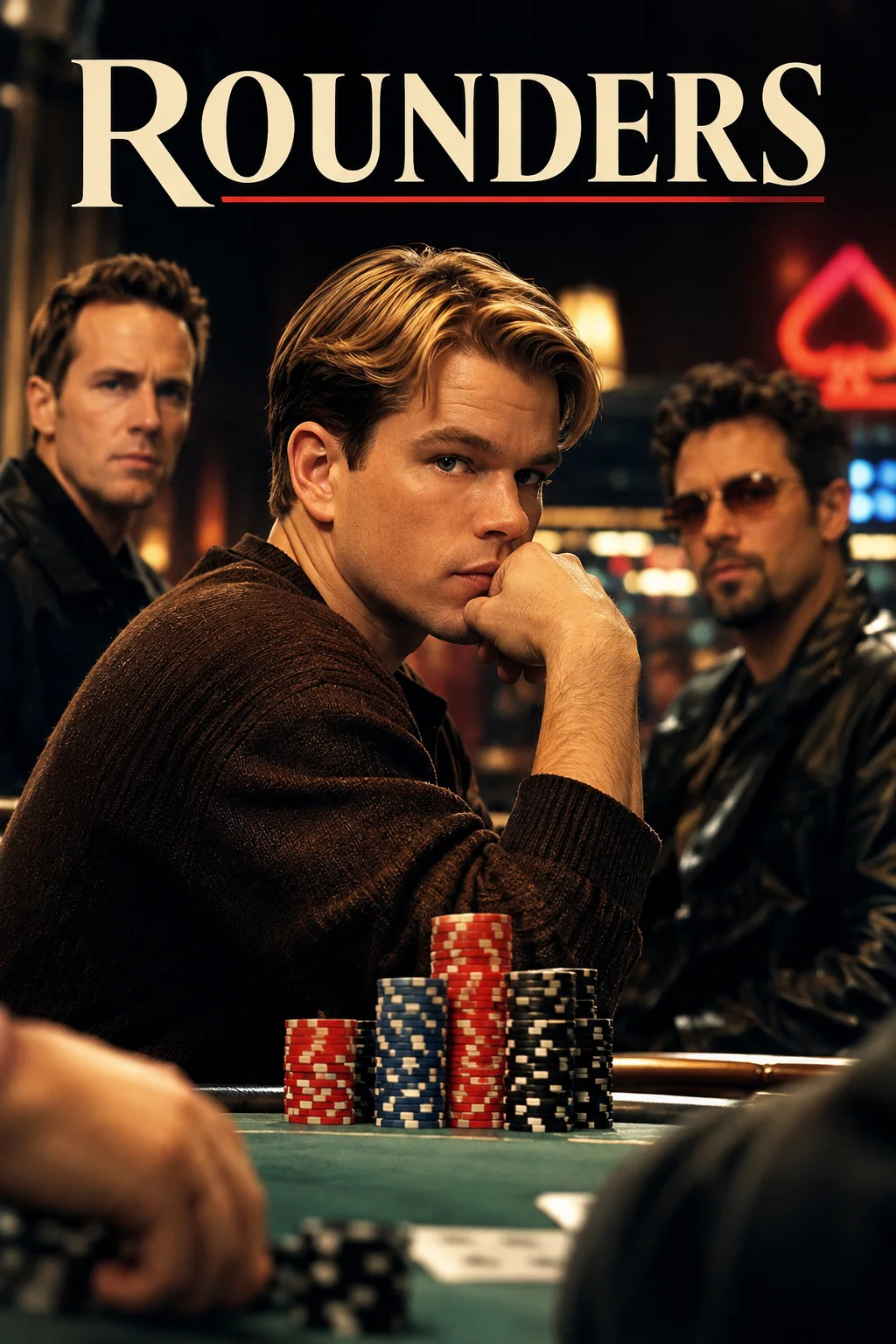
John Dahl's Rounders (1998) is a story about two ways of imagining a future: the security of an ordinary professional life and the uncertainty of underground poker. Matt Damon plays Mike McDermott, a New York law student with an exceptional interest in Texas Hold'em. Edward Norton plays Lester "Worm" Murphy, his childhood friend, whose debts and dishonesty threaten Mike's efforts to rebuild his life. John Malkovich's Teddy KGB is the intimidating opponent who anchors the film's beginning and ending.
The film's lasting influence on poker culture comes partly from its ability to turn concealed information into understandable drama. Mike's narration guides viewers through an environment where decisions, reputation, friendship and financial risk overlap. This analysis examines the major hands and the meaning of the dialogue rather than treating fictional success as a dependable way to earn money. Spoilers follow.
Key Poker Scenes
The opening loss against Teddy KGB
Mike begins with a bankroll of approximately $30,000. In an underground game, he commits his savings to a hand that appears extremely strong. He holds an ace and nine, makes a full house, and ultimately discovers that Teddy holds a higher full house. The loss is devastating because Mike has exposed nearly everything he has accumulated to one decision.
The sequence establishes a crucial distinction between a strong hand and a winning hand. Poker players must act before all relevant information becomes available. A favorable hand can still lose to a stronger one, and an apparently sound decision may produce an unfavorable result. In Mike's case the financial concentration magnifies the consequences: he does not merely lose one contest, but his ability to continue on his previous terms.
The camera and narration make the opening feel like a lesson in expertise. Yet the larger story invites a different reading. Mike's confidence is part of his character, and the defeat shows why confidence without appropriate financial boundaries can become dangerous. His girlfriend Jo expects a different future, and his subsequent promise to leave poker reflects the damage that the loss has caused outside the game.
AI-generated editorial illustration; not an official film still.
Knish, Worm and competing attitudes to risk
Joey Knish, played by John Turturro, offers an alternative to Mike's romantic idea of the professional player. His practical worldview emphasizes survival and avoiding unnecessary exposure. Worm, by contrast, repeatedly depends on immediate opportunities and other people's resources. His return from prison forces Mike to reconsider the commitment he made to Jo.
Worm's willingness to cheat introduces an ethical distinction that matters throughout the film. Deceiving opponents within the accepted rules of a game is different from secretly violating those rules. The film's confrontation at a game attended by police officers illustrates how dishonesty can endanger everyone associated with it. Mike's loyalty to Worm has consequences even when he does not share Worm's methods.
The friendship is therefore not simply a celebration of loyalty. Mike repeatedly accepts risks because someone close to him needs assistance. Personal attachment can make an otherwise unacceptable decision feel necessary. The resulting pressure narrows Mike's sense of his available choices.
The judges' game: reading the room
Mike's encounter with a group of judges demonstrates the storytelling power of poker without relying on a huge wager. He observes their behavior and identifies the hands they are likely to hold. The scene establishes his analytical ability to both the characters and the audience. It also connects his legal education with his fascination for information, interpretation and human behavior.
Real opponents do not reliably reveal their private cards through one gesture. The scene is a dramatic exaggeration of the ability to form hypotheses from incomplete evidence. Its purpose is to tell us why Mike believes he belongs at the table, not to establish that any observer can reproduce his conclusions.
Strategy and Table Psychology
Teddy KGB's Oreo tell
Teddy's distinctive habit involving Oreo cookies becomes important when Mike returns to his game. The film uses a repeated physical action as a visual clue to concealed information. For viewers, this is effective cinematic storytelling: a recognizable object makes an invisible psychological contest visible.
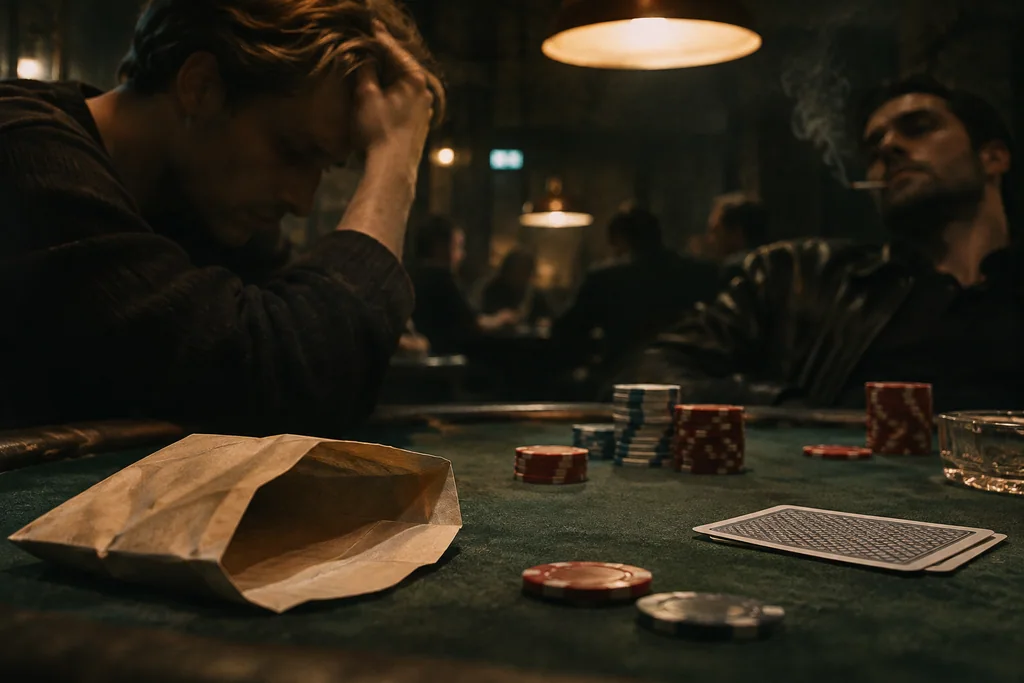
AI-generated editorial illustration; not an official film still.
A poker tell is a behavior that may convey information about a player's state or intentions. It is not a guarantee of what another person holds. People may behave differently under stress, deliberately alter their behavior or simply have habits unrelated to their cards. Interpreting such signals requires caution. The movie compresses ambiguity into a satisfying dramatic revelation.
The scene also raises a question about emotional regulation. Mike chooses to reveal that he has noticed something about Teddy's behavior. Teddy's irritation contributes to the tension. Their exchange is as much a contest of identity and pride as it is a contest involving cards.
The final hand and the difference between result and process
Mike's last confrontation with Teddy reverses the opening loss. A strong made hand survives the uncertainty of the deal, and the result allows him to settle the immediate debts connected to Worm. The film places him in a position where he can choose his future rather than respond exclusively to other people's demands.
The contrast with the opening is emotionally satisfying, but the outcome should not be mistaken for evidence that gambling is a reliable response to debt. A favorable fictional result is selected by the screenplay. In reality, a similar decision could produce a different outcome, and knowledge of a game cannot eliminate uncertainty.
Why Rounders became part of poker culture
Released before the televised and online poker boom, Rounders introduced many viewers to the language of cardrooms and the tension between skill and chance. It treats poker as a social environment with its own conventions, hierarchies and personalities. The dialogue, narration and repeated encounters with recognizable opponents make that environment memorable.
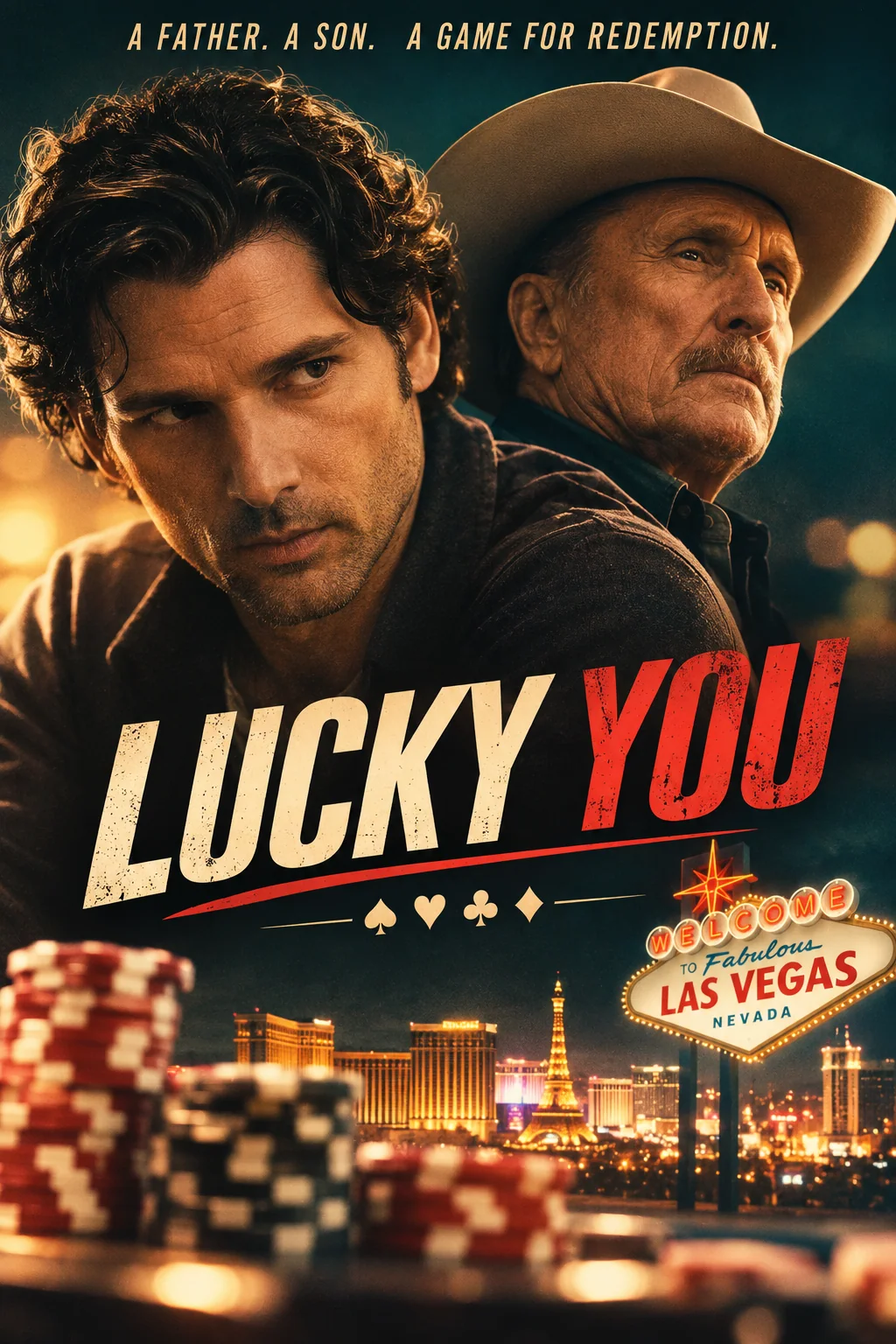
The film's reputation grew as television audiences became familiar with Texas Hold'em. It remains interesting as a historical companion to All In: The Poker Movie, which documents poker's later transformation into a commercial entertainment phenomenon. Its underground settings also provide a contrast with the tournament environment in Lucky You.
Ending explained
Mike leaves for Las Vegas after resolving his immediate financial obligations. His separation from Jo and his decision to abandon a more conventional future leave the ending emotionally complicated. The film presents the departure as a choice about identity, but it does not show what follows. Winning the final game cannot establish that his future is secure.
The movie's greatest contribution is not a formula for winning. It is a vivid portrayal of how uncertainty, friendship, knowledge and ambition influence decisions. Mike's story remains compelling because the table provides a place where he can imagine control, even as the rest of his life becomes less predictable.
Frequently asked questions
Is Rounders based on a true story? The central narrative is fictional, although it draws on recognizable underground poker culture.
What kind of poker appears in Rounders? Texas Hold'em is central to its most memorable scenes.
What is Teddy KGB's tell? His recurring cookie habit functions as a cinematic clue; it should not be treated as a universal real-world method of reading opponents.
Why does Mike return to poker? His loyalty to Worm and his unresolved ambition draw him back into the environment he had attempted to leave.