In most poker movies, the central question is whether a player possesses enough skill, patience, and emotional discipline to defeat an opponent. Shade (2003) introduces a different question: what happens when the game itself cannot be trusted?
Written and directed by Damian Nieman, this neo-noir crime thriller explores the underground gambling world of Los Angeles, where professional hustlers, card manipulators, and experienced gamblers operate within an atmosphere of suspicion. The ensemble cast includes Sylvester Stallone, Stuart Townsend, Gabriel Byrne, Thandiwe Newton, Jamie Foxx, Melanie Griffith, and Hal Holbrook.
Unlike conventional poker dramas, Shade places deception at the center of both its subject matter and storytelling. Characters conceal their intentions, alliances change unexpectedly, and seemingly straightforward encounters acquire different meanings as the narrative progresses. Spoiler warning: this article contains major plot details.
The Card Cons
Inside the underground gambling world
The story follows a group of hustlers whose ambitions extend beyond their existing schemes. Charlie Miller and Tiffany become involved with Vernon, an exceptionally talented card handler whose abilities make him valuable to their plans. Their objective is to confront Dean Stevens, a legendary gambler known as The Dean.
However, reaching his table requires substantial financial resources, and the group's attempts to obtain them create additional complications. The involvement of Larry Jennings introduces further uncertainty, exposing the characters to dangerous criminal interests.
From the beginning, Nieman establishes an environment where apparent opportunities frequently conceal additional threats. The poker table becomes a meeting place for individuals whose stated motivations cannot necessarily be trusted. The movie belongs as much to the tradition of confidence-trick cinema as it does to the poker genre.
Sleight of hand as a cinematic language
One of the most distinctive features of Shade is its visual attention to playing cards. The opening credits establish this immediately through close-up footage of card manipulation. These images introduce the movie's central idea before the main characters have fully entered the story: appearances can be misleading.
Director Damian Nieman's familiarity with sleight of hand influenced both the film's presentation and the actors' preparation. There is, however, an important distinction between stage magic and gambling fraud. Stage magic is consensual entertainment; audiences expect illusion. Gambling fraud violates the participants' expectation of fair competition and can create serious financial consequences.
The movie deliberately explores the uncomfortable territory between these two practices. Its close-up photography creates an atmosphere of technical sophistication, while its criminal storyline demonstrates the consequences of using deception for financial gain.
Deception in the Story
Vernon — the talented card mechanic
Stuart Townsend portrays Vernon, whose exceptional familiarity with playing cards makes him central to the group's ambitions. Vernon's personality reflects one of the movie's recurring contradictions. He possesses specialized knowledge, but that knowledge exists within an environment where personal relationships are unstable.
His interactions with Tiffany and Miller reveal that technical ability is only one component of the larger conflict. The most important uncertainty concerns the intentions of the people surrounding him.
Charlie Miller — ambition without loyalty
Gabriel Byrne's Charlie Miller represents the experienced confidence trickster. His relationships are shaped by opportunity, financial ambition, and self-interest. Unlike Vernon, whose identity is closely connected to his technical abilities, Miller's characterization emphasizes social manipulation.
The movie gradually exposes the vulnerability of this worldview. Someone who treats every relationship as a transaction may eventually discover that other people are applying the same logic to them.
Tiffany and Larry Jennings
Thandiwe Newton's Tiffany introduces additional emotional complexity. Her history with Vernon and her partnership with Miller create a relationship triangle in which attraction, loyalty, and financial ambition overlap. The audience is encouraged to question whether apparently sincere emotional exchanges reflect genuine feelings or calculated behavior.
Jamie Foxx plays Larry Jennings, whose involvement introduces further complications into the group's activities. His storyline demonstrates how an apparently profitable opportunity can conceal circumstances that its participants do not fully understand. Through Jennings, the movie expands its focus from individual deception to the wider consequences of financial misconduct.
The Dean: reputation and psychological power
Sylvester Stallone portrays Dean Stevens, an experienced gambler whose reputation gives him an almost legendary status. The other characters speak about him with a combination of admiration, apprehension, and ambition.
His reputation matters because expectations influence the way people interpret another person's behavior. A famous competitor may appear intimidating before demonstrating any actual ability. Conversely, an unfamiliar individual may be underestimated despite possessing considerable experience.
Hal Holbrook's Professor introduces a philosophical dimension to the movie. His connection to the world of magic emphasizes the difference between appreciating card manipulation as an art form and exploiting it for financial gain. These references give Shade an additional layer of cultural significance for audiences familiar with the history of sleight of hand.
Gambling psychology in Shade
The illusion of control describes the tendency to overestimate one's influence over uncertain outcomes. The characters repeatedly behave as though superior knowledge allows them to control their circumstances. However, their confidence becomes increasingly problematic because they operate within an environment where other individuals are equally capable of concealing information.
Confirmation bias occurs when individuals favor information that supports their existing beliefs while overlooking contradictory evidence. In Shade, characters frequently interpret events according to what they already expect to happen. Someone who desperately wants an opportunity to be genuine may overlook indications that it is not.
The prospect of a substantial financial reward motivates the characters to remain involved despite increasing danger. Their behavior can be interpreted through escalation of commitment: continuing to pursue an objective even when accumulating evidence suggests that doing so may be harmful.
Shade ending explained
The final confrontation with The Dean appears to represent the culmination of the group's ambitions. However, the conclusion reveals that the apparent conflict was part of a larger deception. Vernon and The Dean are involved in an arrangement that ultimately targets Charlie and Tiffany.
This revelation transforms the meaning of earlier scenes. Characters who believed they understood the situation discover that their assumptions were incomplete. Rather than simply identifying the strongest poker player, Shade questions whether the apparent competition was ever the central event.
Its conclusion demonstrates that controlling one aspect of a situation does not necessarily mean controlling the situation as a whole. The movie's most important deception is therefore narrative rather than technical.
How realistic is Shade?
The movie's familiarity with card magic gives its physical performances a recognizable authenticity. Nevertheless, its criminal conspiracies, dramatic coincidences, and elaborate reversals belong primarily to fictional entertainment. Real gambling environments may involve safeguards, surveillance, professional oversight, and legal protections that differ substantially from the underground games depicted in the film.
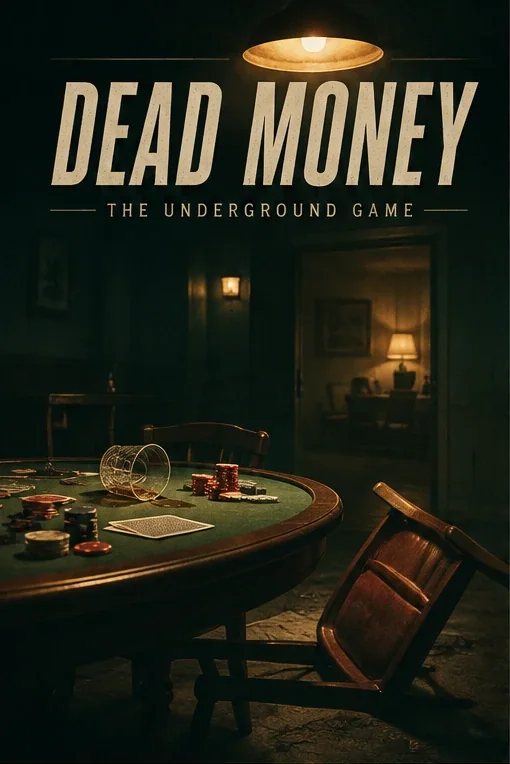
For another interpretation of gambling-related crime, see Dead Money and Tazza: The High Rollers. The relationship between secrecy and personal betrayal is also explored in Poker Face.
Frequently asked questions
Is Shade based on a true story? Its central narrative is fictional, although Damian Nieman drew inspiration from card magic.
Who plays The Dean? Sylvester Stallone portrays Dean Stevens.
Are the card tricks real? The movie incorporates genuine sleight-of-hand performances, while the broader criminal storyline is fictional.
Final thoughts
Shade occupies a distinctive position within the poker movie genre. Its combination of card magic, criminal intrigue, and unreliable relationships creates a story in which appearances are continually challenged. Ultimately, the movie is not simply about the cards people hold. It is about the assumptions they make concerning the people holding them.