What happens when a traditional card game becomes the center of an elaborate criminal underworld? Released in South Korea in 2006, Tazza: The High Rollers combines gambling, crime, dark humor, romance, and psychological suspense. Directed by Choi Dong-hoon, the movie follows a young man whose financial losses draw him into a dangerous environment populated by experienced gamblers and professional confidence tricksters.
Unlike American gambling movies that focus on Texas Hold'em or blackjack, Tazza introduces international audiences to Hwatu, a distinctive deck of flower cards deeply embedded in Korean popular culture. Based on the manhwa created by Huh Young-man and Kim Se-yeong, the film became one of South Korea's biggest cinematic successes of 2006. Spoiler warning: this article discusses major plot developments.
Korean Gambling Culture
What does Tazza mean?
The Korean expression tazza refers to a highly skilled gambler, often someone associated with professional hustling or exceptional card-handling abilities. Within the movie, the title carries implications of reputation, experience, and social authority.
For Goni, this identity initially represents an escape from humiliation and financial insecurity. However, acquiring that identity also exposes him to increasingly dangerous circumstances. The movie challenges viewers to consider whether recognition within a destructive environment should necessarily be considered a meaningful achievement.
Hwatu: the traditional Korean flower cards
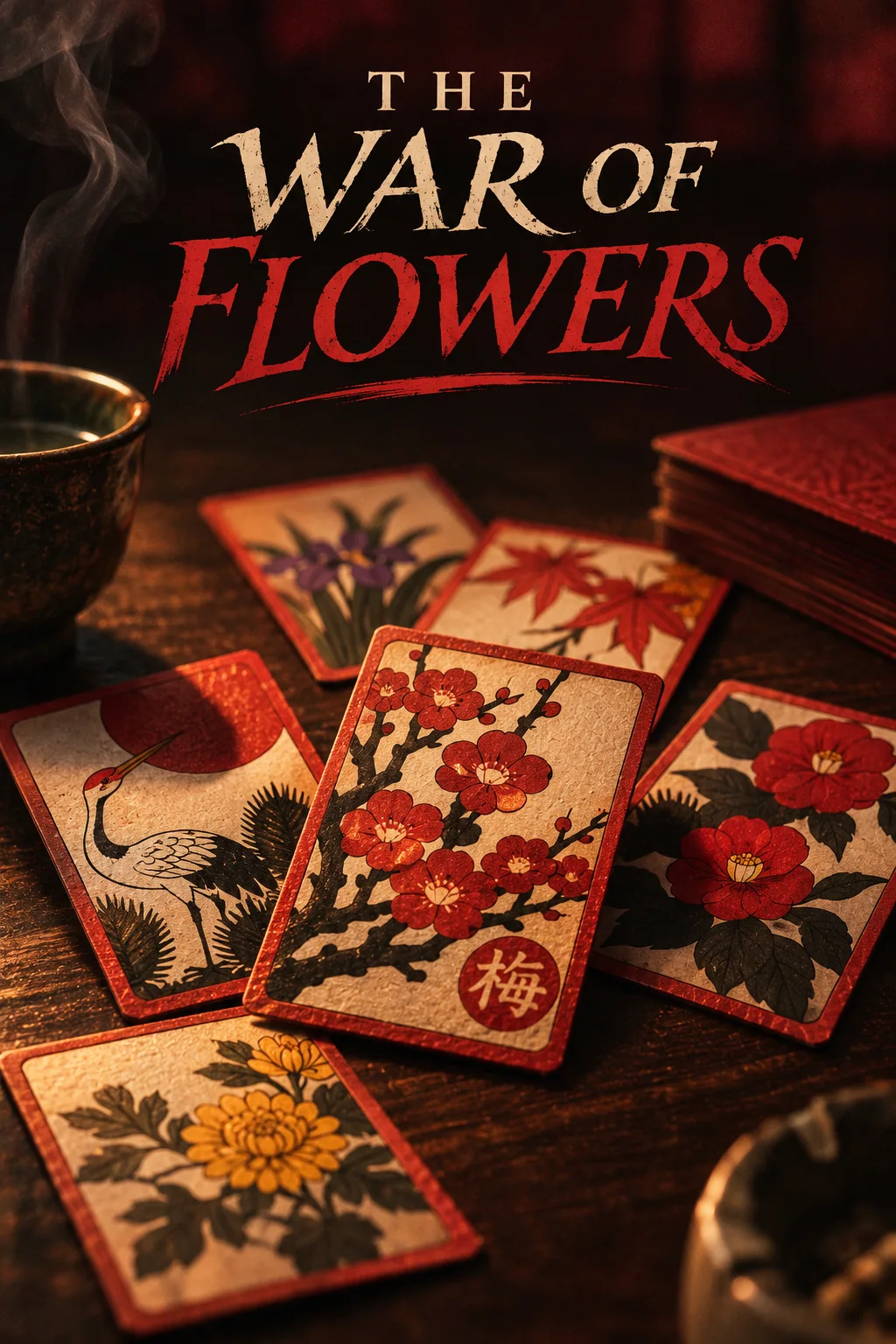
Hwatu cards are visually different from the standard Western deck. Instead of numbered cards divided into hearts, diamonds, clubs, and spades, the traditional deck uses illustrations associated with the twelve months of the year. A standard set contains 48 principal cards, featuring plants, flowers, animals, ribbons, and seasonal imagery.
Hwatu developed from Japanese Hanafuda cards, which reached Korea and acquired their own place in Korean social and recreational culture. The distinction matters because international viewers may initially interpret every gambling scene through their familiarity with Western poker. Tazza depicts a different cultural tradition, even though many of its psychological conflicts are recognizable across national boundaries.
Seotda and Go-Stop
Hwatu is the name of the cards, while Seotda and Go-Stop refer to different games played with them. Seotda involves comparing combinations of cards and is particularly relevant to the gambling environment depicted in Tazza. Go-Stop, by contrast, is widely associated with recreational gatherings and family occasions in South Korea.
| Feature | Hwatu | Seotda | Go-Stop |
|---|---|---|---|
| Classification | Card deck | Card game | Card game |
| Visual identity | Seasonal flower imagery | Hwatu cards | Hwatu cards |
| Cultural significance | Traditional recreation | Competitive gambling associations | Social entertainment |
The criminal setting of the movie should not be confused with the wider cultural significance of these cards. Hwatu is not inherently associated with organized crime. The film deliberately focuses on an extreme environment because it provides the dramatic tension necessary for a crime thriller.
Hwatu and Deception
Goni's first encounter with professional hustlers
Goni, portrayed by Cho Seung-woo, begins the story as an inexperienced young man working in a furniture factory. After losing his savings in a card game involving experienced hustlers, he becomes determined to recover what he has lost.
His initial motivation is connected to financial recovery and humiliation rather than professional ambition alone. Instead of distancing himself from the environment responsible for his losses, Goni becomes increasingly involved in it. This behavior resembles loss chasing, a psychological pattern in which previous gambling losses motivate further financial risk.
Mr. Pyeong: the experienced mentor
Baek Yoon-sik portrays Mr. Pyeong, an experienced card player who becomes Goni's mentor. Their relationship introduces the familiar cinematic contrast between youthful ambition and established experience. Pyeong understands the dangers surrounding professional gambling and initially expects Goni to leave the environment after recovering his losses.
However, the younger man's growing involvement complicates that expectation. Unlike conventional sports mentorship, their relationship develops within an environment where competitive success may depend on deception and unstable personal alliances. The film questions whether acquiring specialized knowledge necessarily represents personal progress. For another interpretation of gambling mentorship, see Deal.
Madam Jeong: social intelligence and hidden intentions
Kim Hye-soo's Madam Jeong is one of the film's most memorable characters. Her influence emerges from her understanding of relationships, reputation, ambition, and the social environment surrounding high-stakes gambling. She introduces a different form of power from that associated with handling cards.
Her interactions with Goni reveal how attraction and apparent loyalty can coexist with conflicting financial interests. The audience is repeatedly encouraged to reconsider the meaning of her behavior. She is an influential participant in the story's network of relationships, rather than merely a romantic interest.
Agwi: fear and intimidation
Kim Yoon-seok portrays Agwi, a dangerous gambler whose reputation creates tension long before his decisive confrontation with Goni. His presence establishes the darker consequences of professional gambling within the film's criminal environment. Agwi represents the point at which an apparently competitive activity becomes inseparable from intimidation and violence.
Why Tazza works as a crime thriller
Choi Dong-hoon uses gambling rooms to create environments in which characters reveal their personalities without necessarily revealing their intentions. Every participant occupies a particular social position. Some depend on reputation, others on financial resources, personal connections, or intimidation.
The cards provide the apparent reason for their encounters, but the relationships between the participants determine much of the suspense. Understanding the emotional stakes is often more important than understanding every card combination. For a Western interpretation of similar themes, see Shade.
The colorful appearance of Hwatu creates a striking contrast with the darker circumstances surrounding the characters. Flowers, birds, and seasonal illustrations might ordinarily suggest nature, tradition, or familiar social gatherings. In Tazza, those same images become associated with financial pressure and betrayal. Close-up photography transforms small objects into important sources of suspense.
Gambling psychology in Tazza
Goni's initial losses establish one of the most recognizable patterns associated with gambling-related harm. Rather than accepting the financial consequences of his experience, he becomes committed to recovering what he has lost. His original objective gradually expands beyond financial recovery. Recognition, revenge, pride, and professional identity become additional motivations.
The illusion of control describes a cognitive bias in which individuals overestimate their influence over uncertain outcomes. As Goni acquires experience, his confidence increases. However, his growing knowledge cannot eliminate the danger created by dishonest participants, criminal relationships, and unpredictable circumstances.
Goni's journey also illustrates escalation of commitment. As people invest increasing amounts of time, money, and emotional energy into an objective, abandoning it may become psychologically difficult. The desire to justify previous decisions can encourage further involvement, even when the original objective has become less important.
Tazza ending explained
The concluding confrontation between Goni and Agwi brings together the movie's central themes of deception, revenge, and psychological pressure. The apparent card game becomes a confrontation in which the consequences extend far beyond financial losses.
Goni must navigate an environment where neither reputation nor technical expertise can guarantee personal safety. The ending offers dramatic resolution without transforming Goni's experiences into an uncomplicated success story. His journey has involved damaged relationships, criminal danger, and considerable personal costs.
The commercial success of Tazza helped establish it as a recognizable entry in South Korean crime cinema. The movie developed into a franchise, including Tazza: The Hidden Card (2014) and Tazza: One Eyed Jack (2019), which shifts the featured game to Western poker.
Frequently asked questions
Is Tazza based on a true story? It is adapted from a Korean manhwa rather than a documented biography.
What card game is played in Tazza? The movie prominently features Seotda, played with Hwatu flower cards.
Is Hwatu the same as poker? No. Hwatu is a different deck with its own cultural history.
Can viewers follow the movie without knowing the rules? Yes. Its relationships and psychological conflicts make the narrative accessible.
Final thoughts
Tazza: The High Rollers demonstrates how gambling cinema can communicate universal psychological themes through a distinctive cultural tradition. Its use of Hwatu gives the film a recognizable Korean identity, while its exploration of ambition, deception, and financial obsession resonates beyond national boundaries.