Why would someone repeatedly risk everything when they already possess the resources necessary to build a comfortable life? Directed by Rupert Wyatt and written by William Monahan, The Gambler (2014) explores this question through Jim Bennett, a literature professor whose destructive relationship with gambling threatens his career, family, financial security, and survival.
Mark Wahlberg portrays a man whose behavior cannot be explained exclusively by financial desperation. Jim comes from a privileged background, possesses considerable intellectual ability, and has opportunities unavailable to many people. Nevertheless, he repeatedly creates circumstances that place his future in danger. The film remakes the 1974 drama starring James Caan and has broader literary connections to Fyodor Dostoevsky's exploration of gambling and human psychology. Spoiler warning: this analysis discusses the ending.
Risk and Self-Sabotage
Jim Bennett's contradictory existence
Jim occupies two substantially different social environments. During the day, he teaches literature to university students. Outside his academic responsibilities, he enters gambling establishments where his financial decisions expose him to serious danger.
The contrast establishes one of the movie's central psychological questions: why does someone capable of sophisticated intellectual analysis repeatedly make destructive personal decisions? Knowledge and emotional regulation are different abilities. Understanding uncertainty does not automatically provide the capacity to manage impulses or respond constructively to psychological distress. Jim's academic identity provides an appearance of stability, while his private activities reveal how unstable his circumstances have become.
Why money is not Jim's ultimate objective
One of the most revealing aspects of Jim's behavior is his unwillingness to stop when gambling produces a favorable outcome. His actions suggest that obtaining money is not sufficient to satisfy the psychological need driving him. Instead, the possibility of losing everything appears to carry its own emotional significance.
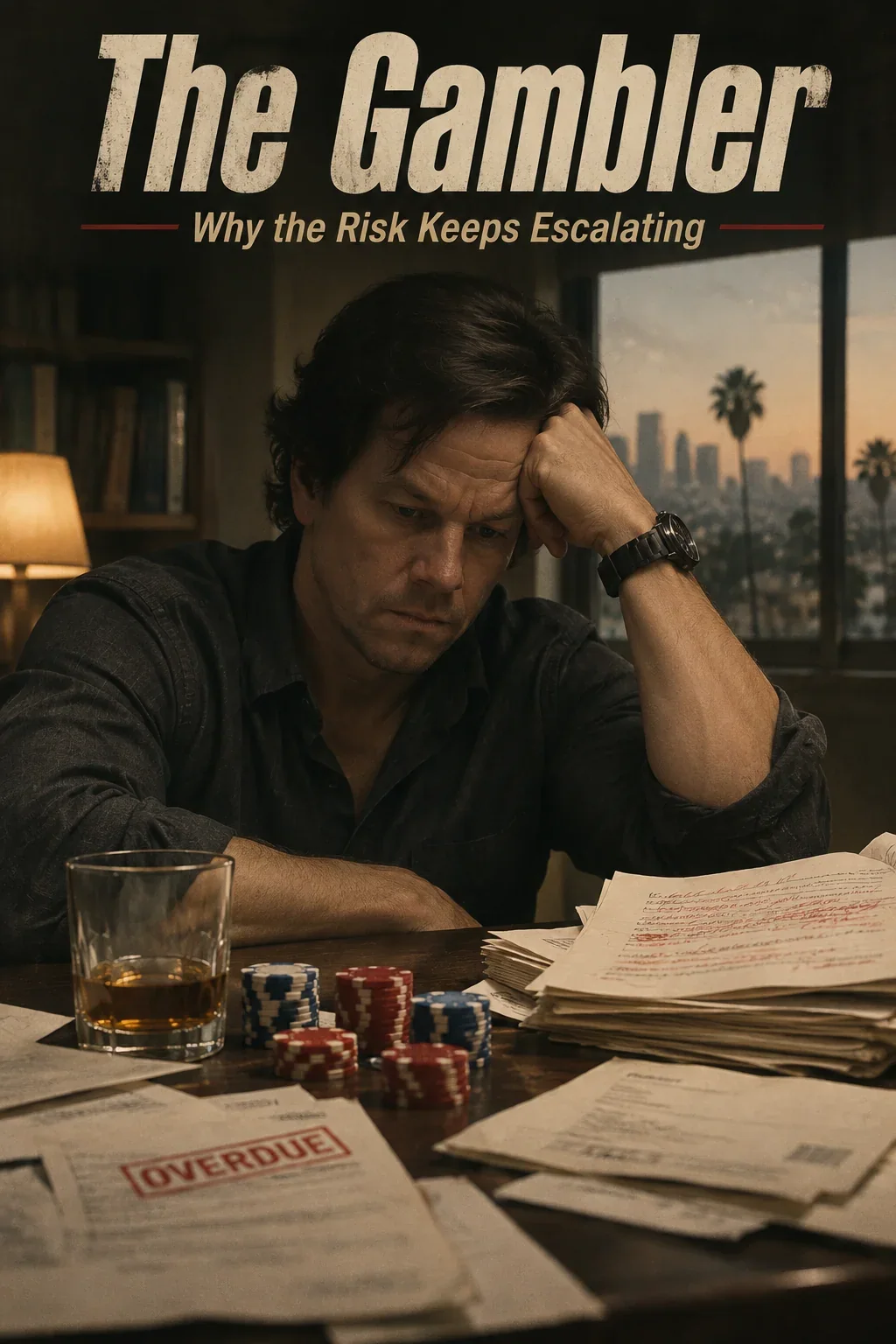
For Jim, gambling can be interpreted as an escape from the limitations of ordinary life. Financial uncertainty creates an immediate experience that temporarily displaces questions about professional achievement, family expectations, and personal identity. In an interview discussing the remake, Rupert Wyatt emphasized the importance of Jim's self-destructive impulses beyond the conventional framework of gambling addiction.

AI-generated editorial illustration; not an official film still.
Perfectionism and all-or-nothing thinking
Jim's lectures reveal his fascination with exceptional artistic talent. He appears dissatisfied with the possibility of becoming merely competent rather than extraordinary. His understanding of achievement leaves little room for gradual development, ordinary satisfaction, or imperfect success.
| Balanced perspective | All-or-nothing perspective |
|---|---|
| Achievement can develop gradually | Only exceptional success matters |
| Failure provides information | Failure defines personal worth |
| Financial security has value | Ordinary stability feels insufficient |
| Progress can be imperfect | Anything less than perfection feels meaningless |
Jim's gambling behavior reflects a similar rejection of moderation. He repeatedly risks financial stability rather than accepting outcomes that fall short of his extreme expectations.
Roberta Bennett and the limits of financial rescue
Jessica Lange portrays Jim's wealthy mother, Roberta. Her ability to provide financial assistance creates an opportunity for Jim to escape his immediate obligations. Nevertheless, he gambles away the money she provides.
The incident exposes the distinction between resolving financial consequences and addressing the behavior responsible for them. Financial assistance can temporarily reduce pressure, but it cannot independently change compulsive gambling patterns. Roberta's relationship with Jim introduces questions about resentment, family boundaries, and accountability. For another exploration of gambling-related family conflict, read Lucky You.
Addiction and Consequences
Why Jim continues gambling after winning
Jim's behavior challenges the assumption that gambling is motivated exclusively by financial rewards. For some individuals experiencing gambling-related problems, the emotional experience of uncertainty can become more significant than the money itself. Anticipation, temporary excitement, and relief from uncomfortable emotions may contribute to repeated participation.
Jim appears to seek circumstances in which ordinary concerns become temporarily irrelevant. The possibility of losing everything creates an immediate psychological conflict that displaces his broader dissatisfaction. This is a cinematic interpretation rather than a formal clinical diagnosis.
Self-sabotage as a form of escape
Self-sabotage describes behavior that undermines an individual's own objectives, relationships, or well-being. Jim repeatedly creates circumstances that threaten the stability he could otherwise maintain. His financial resources, education, and professional opportunities make the contradiction particularly visible.
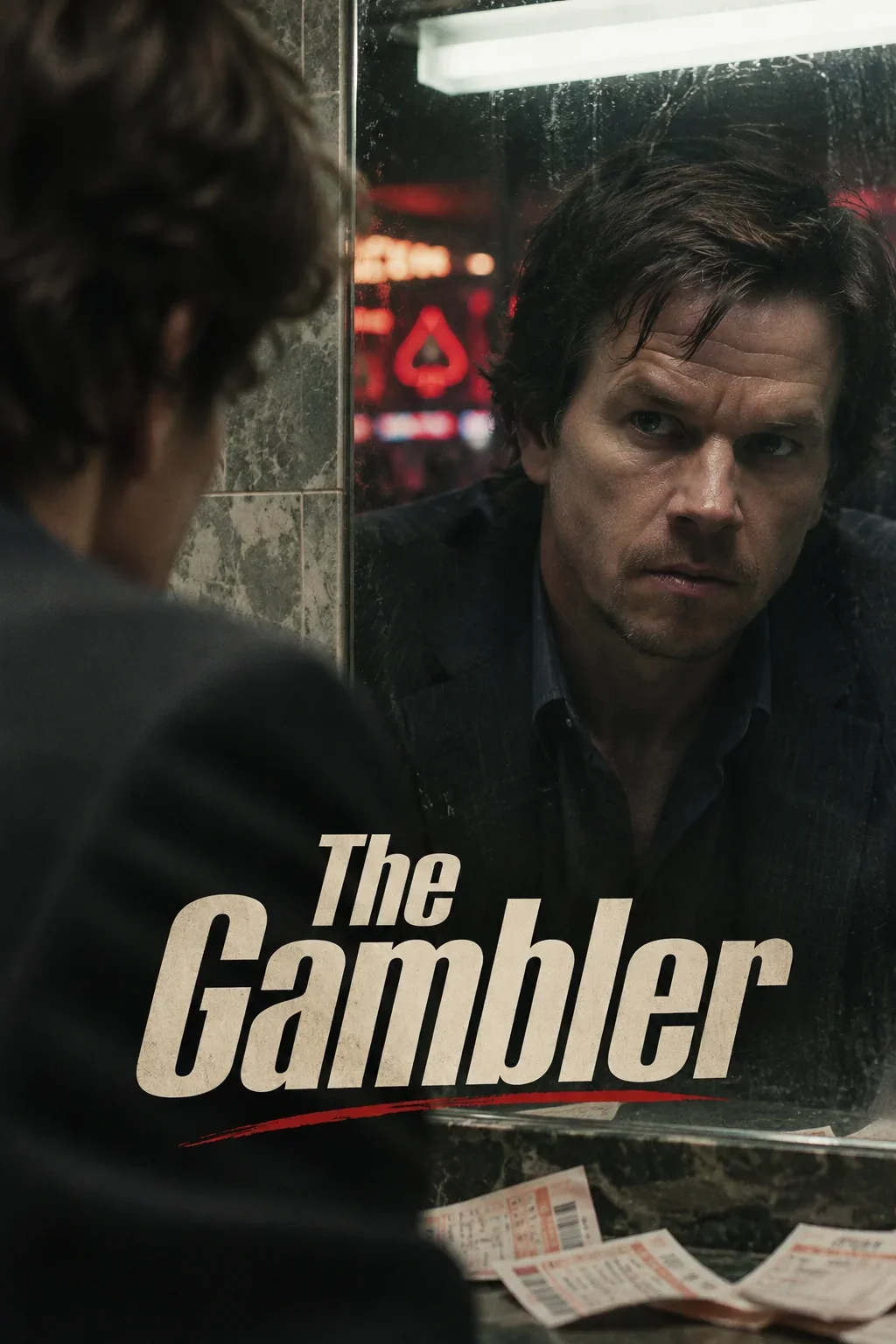
AI-generated editorial illustration; not an official film still.
The movie suggests that creating an immediate crisis may temporarily distract Jim from more complicated questions about meaning, identity, and achievement. Gambling can function as a means of temporarily escaping difficult emotional experiences, but temporary distraction does not resolve the circumstances responsible for those feelings. This mechanism also appears in The Card Counter.
The characters and their psychological roles
Brie Larson portrays Amy, one of Jim's literature students. Jim recognizes her potential as a writer, which makes their relationship significant within the film's examination of artistic ambition. Amy represents a possible connection to a life beyond his destructive routines. However, their relationship involves an imbalance of authority because Jim is her professor. The possibility of romance does not eliminate the ethical complications or independently resolve his gambling problems.
John Goodman's Frank introduces one of the movie's central philosophical arguments. Although he operates within criminal lending, Frank emphasizes the importance of possessing sufficient financial security to remain independent of other people's demands. Jim repeatedly sacrifices financial security in the apparent pursuit of liberation. Frank argues that financial stability can provide the foundation for autonomy. His philosophy should not be confused with an endorsement of his criminal activities.
Neville Baraka and Lee represent the external consequences of Jim's internal conflict. His obligations to these individuals create financial pressure that increasingly affects other people. The movie shifts from psychological drama toward crime thriller as his creditors become more important to the narrative.
Jim's involvement with Lamar, a talented college basketball player, introduces another ethical dimension. Financial desperation leads him to involve a student in a scheme concerning the result of a basketball wager. Rather than confining the consequences of gambling to his own circumstances, Jim exposes another person's future to unnecessary risk. For a historically grounded examination of sports integrity, see Inside Game.
Why the risk keeps escalating
Loss chasing occurs when individuals continue gambling in an attempt to recover previous losses. Jim demonstrates elements of this pattern, particularly as his obligations become increasingly urgent. However, his motivation appears more complicated than straightforward financial recovery. He repeatedly rejects opportunities to reduce his exposure, suggesting that the experience of risk itself has acquired considerable psychological importance.
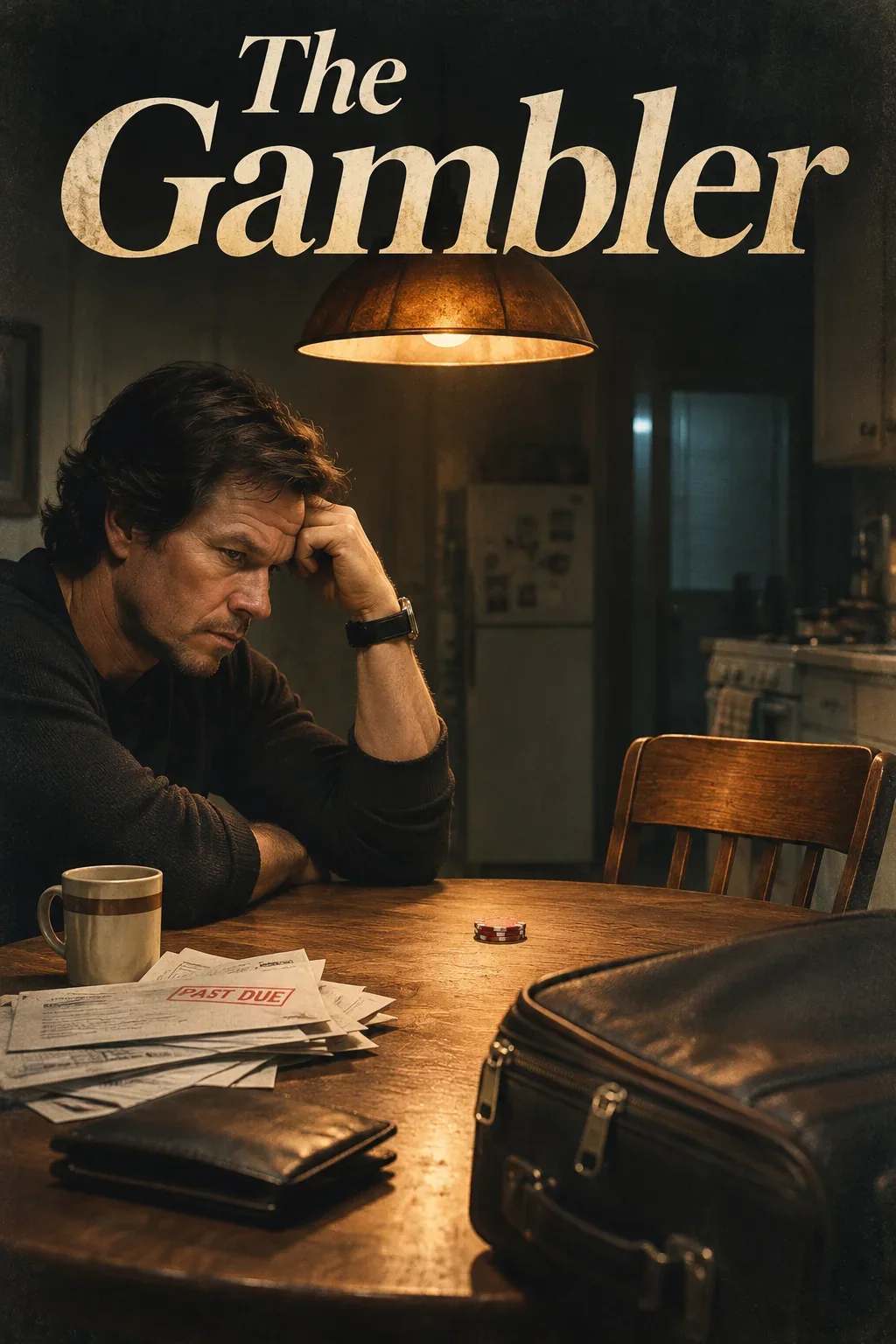
AI-generated editorial illustration; not an official film still.
As Jim becomes more deeply involved with creditors, withdrawing becomes more complicated. His previous decisions create additional obligations. Escalation of commitment helps explain why individuals may continue pursuing a harmful objective despite accumulating evidence that their approach is failing.
Jim occasionally experiences favorable gambling outcomes. However, winning does not establish that the behavior responsible was reasonable. Outcome bias can cause individuals to judge risky decisions more positively when they happen to produce favorable results.
The Gambler ending explained
After the basketball-related scheme produces money, Jim confronts his remaining obligations through a final roulette wager. The wager succeeds, allowing him to repay his creditors. He leaves the gambling establishment and runs through the streets of Los Angeles toward Amy's home.
The final running sequence can be interpreted as a visual expression of release. Throughout much of the movie, Jim is restricted by debt, expectations, secrecy, and obligations. His movement through the city contrasts with the confined gambling environments that previously defined his circumstances. The narrative suggests that he may be moving toward something rather than repeatedly attempting to escape himself.
The film's conclusion creates a significant contradiction. Jim escapes his immediate financial crisis through another successful gambling decision, despite the preceding narrative demonstrating its destructive consequences. This risks reinforcing the mistaken belief that one final wager can solve an existing financial problem. Winning does not constitute treatment for gambling addiction. Financial relief does not necessarily eliminate compulsive behavior or the possibility of relapse. A similar contradiction appears in Win It All.
The Gambler (1974) vs. The Gambler (2014)
| Feature | 1974 original | 2014 remake |
|---|---|---|
| Leading actor | James Caan | Mark Wahlberg |
| Director | Karel Reisz | Rupert Wyatt |
| Protagonist | Axel Freed | Jim Bennett |
| Central conflict | Compulsive risk-taking | Self-destruction and identity |
| Overall tone | Bleak psychological drama | Existential crime thriller |
| Resolution | More pessimistic | More hopeful |
The remake preserves the original's fascination with destructive risk-taking while introducing a different interpretation of personal freedom. Its comparatively optimistic ending divided critics, some of whom considered the earlier film a more convincing portrayal of desperation.

AI-generated editorial illustration; not an official film still.
Frequently asked questions
Why does Jim gamble? His behavior can be interpreted through compulsive risk-taking, emotional avoidance, dissatisfaction with his identity, and self-sabotage.
Is it based on a true story? It is a fictional remake of the 1974 movie written by James Toback, whose screenplay was partly influenced by his own experiences.
Does Jim pay off his debts? Yes, the final gambling sequence allows him to repay his outstanding obligations.
Does he recover from addiction? The ending suggests possible change but does not establish lasting recovery.
Final thoughts
The Gambler examines the relationship between financial risk, personal identity, and self-destructive behavior. Jim's circumstances demonstrate why intelligence, privilege, and financial resources do not automatically protect someone from gambling-related harm. Genuine independence requires more than escaping debt. It requires addressing the behavioral and emotional patterns that created it.